Evaluating 3D Rendering Glossy Idea Icons for Modern Design Workflows
In the evolving landscape of digital design, visual assets serve as the primary interface between a brand and its audience. Among the various tools available to designers, 3d Rendering Glossy Idea Icons have emerged as a significant resource for creating engaging, high-fidelity user interfaces and marketing materials. These assets are not merely decorative; they function as critical communication tools that convey concepts such as innovation, creativity, and technological sophistication. For professionals evaluating whether to integrate these pre-rendered elements into their workflow, understanding the technical specifications, usability, and strategic fit is essential.
Understanding the Asset Class
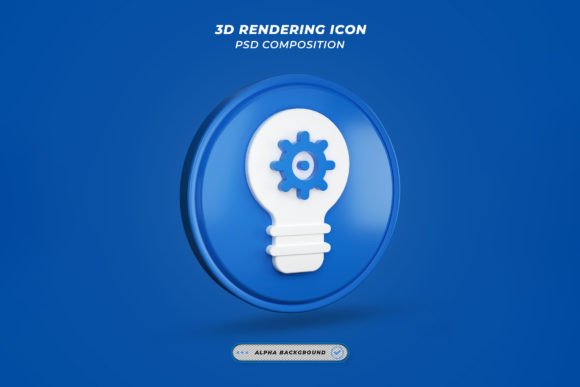
3D rendering glossy idea icons represent a specific subset of digital graphics characterized by their depth, lighting effects, and polished surface textures. Unlike flat vector icons, which rely on simple shapes and solid colors, these three-dimensional objects utilize complex shading and reflection to simulate real-world materials. The "glossy" aspect refers to the specular highlights that give the icons a premium, tactile appearance. This aesthetic is particularly popular in tech startups, SaaS platforms, and modern web applications where conveying a sense of cutting-edge quality is paramount.
When designers search for popular 3d rendering colorful 3d icons, they are often looking for versatility. The color palette plays a crucial role in setting the tone of the project. Vibrant, saturated colors can evoke energy and playfulness, while muted tones might suggest professionalism and stability. The ability to customize these colors is a key factor in determining the utility of any template package.
Technical Specifications and Usability
A primary concern for any designer adopting new assets is the ease of integration. High-quality templates are engineered to minimize friction in the design process. For instance, professional-grade files often include Smart Object Replacement Layers. This feature is pivotal for efficiency. Instead of manually adjusting lighting, shadows, and perspective for every change, users can simply double-click the smart object layer, insert their own graphic or adjust the base shape, and save. The software automatically updates the main composition, maintaining consistent lighting and reflections.
The resolution of these assets is another critical metric. A standard requirement for high-end print and digital display is a resolution of 4500 x 3000 pixels at 300 DPI. This ensures that the icons remain crisp and detailed even when scaled for large-format printing or high-density retina displays. Lower resolution assets may appear pixelated or blurry, undermining the professional look they are intended to support. Therefore, verifying the DPI and pixel dimensions before download is a necessary step in the evaluation process.
Furthermore, the organization of the source file impacts workflow speed. Well-structured PSD files with clearly labeled layers allow for rapid navigation. When all colors can be changed easily through adjustment layers or hue/saturation controls, designers can match brand guidelines without extensive manual editing. This level of customization ensures that the icons do not look like generic stock images but rather like bespoke elements tailored to the specific project.
Strategic Benefits and Tradeoffs
Adopting pre-made 3D icon sets offers several distinct advantages. The most obvious benefit is time savings. Creating high-quality 3D renders from scratch requires specialized software such as Blender, Cinema 4D, or Maya, along with a steep learning curve in modeling, texturing, and lighting. By utilizing ready-made templates, designers bypass these technical hurdles, allowing them to focus on layout, typography, and overall user experience. This makes 3d Rendering Glossy Idea Icons an attractive option for teams with tight deadlines or limited 3D modeling expertise.
However, there are tradeoffs to consider. While templates are versatile, they are not unique. If a popular set is used by multiple brands within the same industry, there is a risk of visual homogeneity. To mitigate this, designers should leverage the customization features extensively. Changing colors, combining different icons, or adding unique background elements can help differentiate the final output. Additionally, while smart objects simplify editing, they do not offer the same level of geometric freedom as native 3D modeling. If a project requires a completely novel shape that does not exist in the template library, starting from scratch may still be necessary.
Ideal Use Cases
These assets are a strong fit for several specific scenarios. They are particularly effective in:
- Pitch Decks and Presentations: High-resolution, glossy icons can make slides more engaging and help visualize abstract concepts like "innovation" or "growth."
- Website Hero Sections: Large, colorful 3D elements draw attention and can serve as focal points above the fold.
- App Onboarding Screens: Friendly, polished icons can guide users through new features in a visually appealing way.
- Social Media Graphics: Eye-catching 3D visuals perform well on platforms like Instagram and LinkedIn, where stopping the scroll is crucial.
In these contexts, the visual impact of the glossy finish enhances perceived value and professionalism. The high resolution ensures that the assets look sharp across various devices, from mobile phones to desktop monitors.
When to Consider Alternatives
Despite their benefits, 3D glossy icons are not suitable for every project. Designers should consider alternatives if:
- Brand Guidelines Require Flat Design: Some brands adhere strictly to minimalist, flat design languages. Introducing 3D elements could clash with established visual identity systems.
- Performance Constraints Exist: While static images are generally lightweight, complex 3D visuals can sometimes lead to larger file sizes if not optimized properly. For websites with strict performance budgets, simpler SVG icons might be preferable.
- Unique Geometry is Required: If the concept is highly specific and cannot be represented by standard icon shapes, custom 3D modeling or illustration may be the only viable path.
Making the Decision
When evaluating whether to purchase or download a set of 3d Rendering Glossy Idea Icons, readers should assess their current skill set and project requirements. If the goal is to achieve a high-end, modern look quickly without investing months in learning 3D software, these templates are an excellent solution. The inclusion of PSD and JPG formats provides flexibility for both editable workflows and quick drag-and-drop usage.
It is also important to verify the license terms. Ensure that the assets can be used for commercial projects if intended for client work. Additionally, checking for customer support or documentation can be helpful, especially for users new to smart object workflows. Remember that images shown in previews are often examples for presentation purposes only, so reviewing the actual included files is crucial.
Ultimately, the decision hinges on the balance between customization needs and efficiency gains. For many modern design projects, the ability to edit colors and replace content with just a few clicks offers a compelling value proposition. By integrating these high-quality, organized assets, designers can elevate their visual output while maintaining a streamlined production process. As with any design tool, the best results come from understanding the capabilities of the asset and applying it strategically within the broader context of the user experience.