Mastering Visual Communication: The Power of High-Resolution 3D Icon Sets in Modern Design
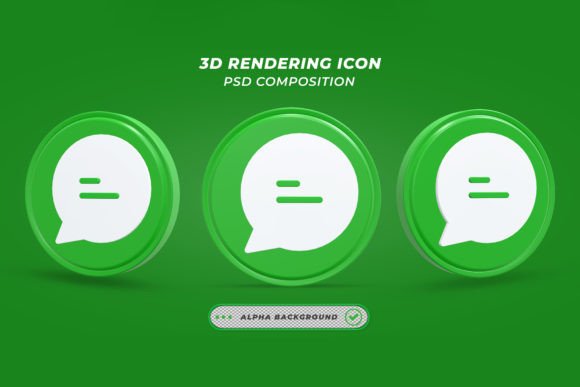
In the rapidly evolving landscape of digital design, the ability to communicate complex ideas quickly and effectively is paramount. Whether you are a seasoned graphic designer, a marketing professional, or a small business owner managing your own brand, visual assets play a critical role in capturing attention. Among the most versatile and impactful tools available today are high-resolution 3D icon sets. Specifically, concepts like the "Buttons Set with Message Icon Concept 3D" have gained significant traction due to their vibrant aesthetic and functional flexibility. This article explores the significance of these colorful 3D renders, how they enhance user experience, and why utilizing organized, editable templates can streamline your creative workflow.
The Rise of 3D Aesthetics in Digital Interfaces
For years, flat design dominated the web and mobile interfaces. It was clean, minimal, and fast to load. However, as screen resolutions improved and processing power increased, designers began craving more depth and tactile realism. This shift gave birth to the modern 3D trend. Unlike the skeuomorphic designs of the early 2000s, which tried to mimic real-world materials exactly, today’s 3D icons are stylized, colorful, and playful. They offer a sense of depth without the clutter.
When we look at a popular 3d rendering colorful 3d icons high resolution render, we are not just seeing a pretty picture. We are seeing a carefully constructed visual cue. A 3D message button, for instance, invites interaction. It looks pressable. It suggests that clicking it will result in an action. This psychological trigger is essential for improving conversion rates on websites and engagement on social media platforms. By using high-quality 3D objects, creators can bridge the gap between static content and interactive experience.
Why Resolution and Detail Matter
One of the most common mistakes beginners make is underestimating the importance of file quality. A pixelated icon can undermine the credibility of an entire project. This is where specifications like 4500 x 3000 resolution with 300 DPI become crucial. DPI, or dots per inch, determines the print quality of an image. While 72 DPI is standard for screens, 300 DPI ensures that your assets remain crisp even when used in high-definition displays or printed materials like brochures and business cards.
Having access to such high-resolution renders means you never have to worry about scaling issues. You can use the same asset for a tiny favicon, a large website banner, or a physical product package. This versatility saves time and money, eliminating the need to recreate assets for different mediums. Furthermore, high-resolution files allow for greater detail in lighting, shadows, and textures, which contributes to the overall premium feel of your design.
Efficiency Through Smart Object Technology
Creating 3D renders from scratch requires specialized software, powerful hardware, and a steep learning curve. For many professionals, this is not a feasible option for every project. This is where pre-made templates shine. The concept of very easy to use templates is built around the idea of democratizing high-end design. When a template is described as having "Smart Object Replacement Layers," it refers to a specific feature in Adobe Photoshop that allows for non-destructive editing.
Here is how it works in practice:
- Open the PSD File: The file is structured with organized layers, meaning background, shadows, highlights, and the main object are separated.
- Locate the Smart Object: You will see a layer thumbnail with a small icon indicating it is a smart object.
- Double-Click to Edit: This opens a separate window containing the source image or 3D render.
- Replace or Modify: You can swap the message icon for a different symbol, change the color hue, or adjust the lighting.
- Save and Update: Once you save the smart object, the main file updates automatically with your changes.
This process transforms what could be hours of rendering time into a matter of minutes. It allows designers to maintain consistency across a brand while experimenting with different variations. For example, if you are creating a social media campaign, you can quickly generate ten different versions of a "Contact Us" button in various colors to see which performs best, all without touching a 3D modeling program.
Customization and Color Theory
Another significant advantage of these templates is the ease of color modification. In design, color is not just decorative; it is communicative. Blue often signifies trust and professionalism, making it ideal for corporate message buttons. Orange or red might indicate urgency or excitement, suitable for sales or alerts. Because the layers are very organized, changing the color scheme to match your brand identity is straightforward.
Users can adjust hue, saturation, and lightness sliders to tweak the palette instantly. This flexibility ensures that the 3D icons do not look like generic stock images but rather like bespoke elements created specifically for your project. It is important to note, however, that all images that are not included are examples for presentation purposes only. This disclaimer reminds users that while the structure and style are provided, the specific contextual imagery might need to be swapped out to fit their unique narrative.
Practical Applications in Business and Creativity
Understanding the technical aspects is helpful, but knowing where to apply these assets is where true value lies. Here are several scenarios where high-quality 3D icon sets can elevate your work:
- Web Design and UI/UX: Use 3D buttons for call-to-action sections. Their depth makes them stand out against flat backgrounds, guiding the user’s eye to important links.
- Social Media Marketing: Eye-catching visuals stop the scroll. A colorful 3D message icon can be used in Instagram stories or LinkedIn posts to announce new communication channels or customer support availability.
- Presentation Decks: Break up text-heavy slides with relevant 3D icons. They add visual interest and help audiences retain information better than bullet points alone.
- E-commerce Packaging: With 300 DPI files, you can incorporate these icons into physical packaging designs, creating a cohesive brand experience from online browsing to unboxing.
Building a Sustainable Creative Workflow
Adopting these tools is not just about saving time on a single project; it is about building a sustainable workflow. By relying on well-structured templates, you reduce burnout and free up mental energy for higher-level creative decisions. Instead of worrying about how to render a shadow correctly, you can focus on the message you want to convey. This aligns with the principle of working smarter, not harder.
Moreover, exploring diverse design resources helps broaden your aesthetic understanding. When you see other works from the same creator, you may discover new styles, color palettes, or composition techniques that inspire your future projects. Design is an iterative process, and exposure to high-quality assets raises your own standards and capabilities.
Common Misconceptions About Template Usage
Some designers hesitate to use templates, fearing it makes their work look generic or "cheating." This is a misunderstanding. Templates are tools, much like a camera or a paintbrush. The creativity lies in how you customize and integrate them. By changing colors, combining different icons, and placing them in unique layouts, you create something original. The goal is not to copy, but to accelerate the production of high-quality visuals.
Additionally, there is a misconception that 3D assets are too heavy for web use. While raw PSD files are large, the final exported JPG or PNG images can be optimized for web performance without losing visual impact. The key is starting with a high-resolution source so that compression artifacts are minimized during optimization.
Conclusion
The integration of Buttons Set with Message Icon Concept 3D and similar high-resolution assets represents a significant step forward in accessible digital design. By leveraging colorful, high-DPI renders with smart object functionality, creators can produce professional-grade visuals with unprecedented ease. Whether you are enhancing a website, boosting social media engagement, or designing print materials, these tools offer the perfect blend of aesthetic appeal and practical efficiency.
Remember, the value of these resources lies in their adaptability. Take the time to explore the organized layers, experiment with color changes, and understand how 3D depth influences user perception. As you incorporate these elements into your work, you will find that your designs not only look better but also communicate more effectively. Thanks for downloading, and be sure to explore other works that might complement your growing design toolkit. The right assets, used creatively, can transform good projects into great ones.