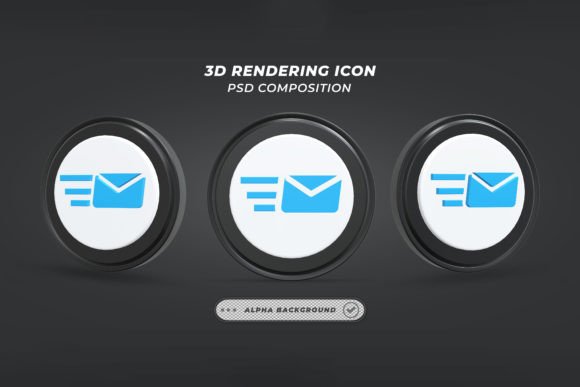
Sending Mail Icon in 3D Rendering: Elevating Digital Communication Visuals
In the fast-paced world of digital design, first impressions are often formed in milliseconds. Whether you are crafting a landing page for a new SaaS product, designing an email newsletter header, or creating social media graphics for a marketing campaign, the visual assets you choose play a pivotal role in user engagement. This is where the Sending Mail Icon in 3D Rendering becomes an indispensable tool for modern creators. Unlike flat, two-dimensional icons that have dominated web design for the past decade, 3D rendered objects add depth, texture, and a tactile quality that draws the eye and communicates professionalism.
For entrepreneurs, marketers, and freelancers, understanding how to leverage high-quality 3D assets can significantly enhance the perceived value of their work. A well-rendered icon does not just decorate a space; it guides the user’s attention and reinforces the message. When we talk about a sending mail icon in this context, we are referring to a versatile visual element that symbolizes communication, delivery, and connectivity. By utilizing a pre-rendered, high-resolution asset, you bypass the steep learning curve of 3D modeling software while still achieving a premium aesthetic.
Why Depth Matters in Modern UI and Marketing Design
The shift toward 3D elements in user interface (UI) and user experience (UX) design is not merely a trend; it is a response to the human desire for realism and interaction. Flat design, while clean, can sometimes feel sterile or generic. A Sending Mail Icon in 3D Rendering introduces shadows, lighting, and perspective that make the object feel tangible. This tangibility creates a psychological connection with the viewer. When a user sees a glossy, well-lit envelope or paper plane icon, it feels more "clickable" and inviting than a simple vector outline.
Consider the scenario of a small business owner launching a new customer support portal. Using a standard, free icon library might save time initially, but it rarely distinguishes the brand. However, integrating a high-quality 3D rendered mail icon into the hero section of the website immediately signals attention to detail. It suggests that the company invests in quality, which subtly translates to trust in their services. For bloggers and content creators, these visuals break up text-heavy posts, making the content more digestible and shareable on platforms like Pinterest or LinkedIn, where visual appeal drives clicks.
Practical Use Cases Across Industries
The versatility of a Sending Mail Icon in 3D Rendering extends far beyond simple website decoration. Here is how different professionals can apply this asset in real-world situations:
- Email Marketing Campaigns: Marketers can use the icon as a central visual in newsletter headers to announce new updates or promotions. The 3D effect stands out in crowded inboxes, increasing open rates.
- App Onboarding Screens: UX designers can incorporate the icon into tutorial slides to explain features related to messaging or notifications. The clarity of a 3D object helps users understand functionality quickly.
- Presentation Decks: Consultants and educators often need to illustrate concepts of communication flow. A high-resolution 3D icon adds polish to PowerPoint or Keynote slides, making professional presentations more engaging.
- Social Media Graphics: Freelancers managing social media accounts can use the icon in carousel posts about "How to Reach Us" or "Contact Strategies." The vibrant nature of 3D renders performs well on visual-first platforms like Instagram.
Each of these scenarios benefits from the high resolution and clarity that professional rendering provides. When an image is crisp and detailed, it maintains its integrity across various devices, from large desktop monitors to small mobile screens.
The Advantage of Ready-Made High-Quality Templates
Creating a photorealistic 3D icon from scratch requires specialized skills in software like Blender, Cinema 4D, or Maya, along with significant time investment in lighting, texturing, and rendering. For most users, this is not a feasible workflow. This is why accessible templates are so valuable. A well-structured Sending Mail Icon in 3D Rendering template is designed with the end-user in mind, prioritizing ease of use without sacrificing quality.
High-quality templates typically come with a resolution of 4500 x 3000 pixels at 300 DPI. This specification is crucial because it ensures the image is print-ready as well as web-optimized. Whether you are designing a physical brochure or a digital banner, you will not encounter pixelation or blurriness. Furthermore, the inclusion of Smart Object Replacement Layers in PSD files transforms the editing process. Instead of navigating complex 3D scenes, users can simply double-click the smart object layer, insert their own color codes or minor design tweaks, and save. The changes automatically update across the entire composition.
This level of organization means that even users with basic Photoshop knowledge can achieve professional results. The ability to change all colors easily allows for seamless brand integration. If your company uses a specific shade of blue for its branding, you can match the icon perfectly, ensuring consistency across all marketing materials. This flexibility is what makes such resources "very easy to use" and highly efficient for busy professionals.
What to Consider Before Downloading and Using
While the convenience of pre-made 3D assets is undeniable, users should approach their selection with a strategic mindset. Not all 3D renders are created equal. When evaluating a Sending Mail Icon in 3D Rendering resource, consider the lighting style. Does it match the overall aesthetic of your project? A soft, diffuse light might suit a healthcare or educational brand, while a high-contrast, glossy look might be better for tech or gaming industries.
Additionally, always check the file formats included. A comprehensive package should include both PSD (Photoshop) and JPG files. The PSD allows for customization, while the JPG offers a quick-drop solution for those who do not need edits. It is also important to remember that any background images or contextual props shown in preview thumbnails are often for presentation purposes only. Focus on the core object—the mail icon itself—and visualize how it will sit within your specific layout.
Another key consideration is licensing. Ensure that the asset is cleared for commercial use if you intend to use it for client work or products you sell. Most reputable creators provide clear guidelines, but it is always wise to double-check. By choosing a well-organized, high-resolution template, you are not just buying an image; you are buying time and creative freedom.
Enhancing Your Creative Workflow
Integrating tools like this into your workflow is about working smarter, not harder. For hobbyists and small business owners, the barrier to entry for high-end design has never been lower. You no longer need a dedicated graphic design team to produce visuals that compete with larger corporations. By leveraging a Sending Mail Icon in 3D Rendering that is 100% easy to edit, you maintain control over your brand’s visual identity while minimizing production costs.
As you explore these resources, take a moment to browse other works from the same creator. Often, designers who produce high-quality mail icons also offer complementary assets, such as 3D phones, calendars, or user avatars. Building a cohesive library of 3D elements can streamline your future projects, allowing you to maintain a consistent visual language across all your communications. Thanks for downloading, and remember that the right visual asset can turn a good message into a great one.