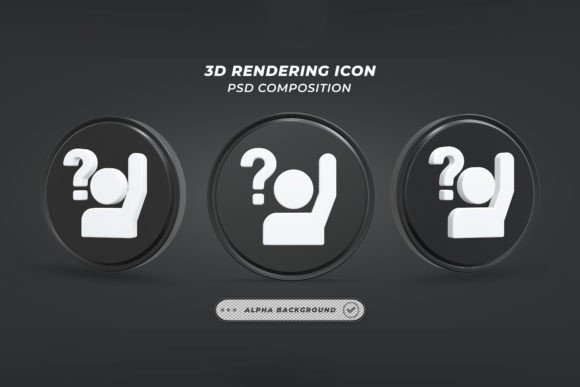
Evaluating the 3D Render User Question Icon for Professional Design Workflows
In the rapidly evolving landscape of digital design, visual assets serve as the primary interface between a brand and its audience. Among the myriad of resources available to modern creators, the 3d Render User Question Icon stands out as a specialized tool designed to bridge the gap between generic flat design and high-fidelity three-dimensional aesthetics. For professionals ranging from marketing managers to freelance UI designers, understanding the practical utility of such assets is crucial. This analysis explores the technical specifications, usability, and strategic value of this specific 3D render, offering a grounded perspective on how it fits into contemporary creative workflows.
The Shift Toward High-Fidelity Visual Communication
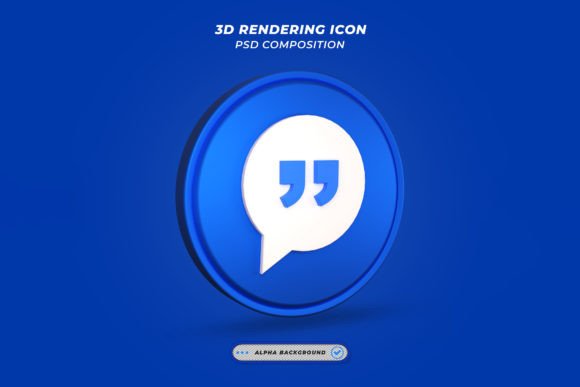
Visual communication has moved beyond simple two-dimensional representations. Users now expect depth, texture, and realism in the interfaces they interact with daily. A 3d Render User Question Icon is not merely a decorative element; it is a functional signifier that guides user behavior. Whether used in help centers, customer support portals, or interactive tutorials, a question icon must be instantly recognizable while maintaining aesthetic harmony with the surrounding design system.
The appeal of this particular asset lies in its ability to convey clarity through dimensionality. Unlike flat icons that can sometimes appear sterile or overlooked, a well-rendered 3D object captures light and shadow, creating a focal point that draws the eye without overwhelming the layout. This balance is essential for maintaining user engagement while ensuring that navigational cues remain effective.
Technical Specifications and Quality Assurance
When evaluating any digital asset, resolution and file structure are paramount. The 3d Render User Question Icon is delivered with a resolution of 4500 x 3000 pixels at 300 DPI. This specification is significant for several reasons. First, it ensures that the image remains crisp and detailed even when scaled for large-format prints or high-density retina displays. Second, the 300 DPI standard makes the asset suitable for both web and print applications, providing versatility that many screen-only assets lack.
The inclusion of both PSD (Photoshop Document) and JPG formats addresses different stages of the design process. The JPG serves as a ready-to-use asset for quick implementations, while the PSD file offers the flexibility required for custom projects. This dual-format approach acknowledges that designers often need immediate solutions but also require the capacity for deep customization when brand guidelines demand it.
Usability and Workflow Efficiency
One of the most compelling features of this template is its emphasis on ease of use. In professional environments, time is a critical resource. Templates that require extensive setup or complex layer management often end up being discarded in favor of simpler, albeit lower-quality, alternatives. This 3d Render User Question Icon is engineered to mitigate that friction.
The file structure utilizes smart object replacement layers, which are meticulously organized. For those unfamiliar with advanced Photoshop techniques, a smart object allows non-destructive editing. By simply double-clicking the smart object layer, users can edit the contents in a separate window, save their changes, and see them reflected immediately in the main composition. This process eliminates the risk of accidentally altering lighting effects, shadows, or perspective angles that were carefully crafted in the original render.
Furthermore, the claim that the asset is "100% very easy to edit" holds weight when examining the layer hierarchy. Organized files reduce cognitive load, allowing designers to focus on creative decisions rather than troubleshooting technical issues. The ability to change all colors easily means that the icon can be adapted to match any brand palette within minutes, ensuring consistency across diverse marketing materials.
Practical Applications and Audience Fit
Who benefits most from integrating a 3d Render User Question Icon into their toolkit? The answer spans a wide demographic of creative professionals. Marketing teams can use these icons to create engaging social media graphics that explain complex services. Educators and publishers might incorporate them into e-learning modules to highlight FAQ sections or interactive quizzes. Small business owners, who often manage their own branding, will appreciate the high-quality output that requires minimal technical expertise to customize.
Consider a scenario where a SaaS company is launching a new feature. They need to create a series of onboarding emails. Using a generic clip-art question mark may undermine the premium feel of their software. However, inserting a high-resolution, professionally lit 3D question icon adds a layer of polish and professionalism that reinforces the brand's value proposition. The tactile quality of the render suggests attention to detail, a trait customers associate with reliable service.
Flexibility and Customization Potential
While the base render is visually striking, its true value emerges through customization. The organized smart objects allow for more than just color changes. Designers can adjust textures, modify lighting intensities, or even composite the icon into different backgrounds seamlessly. This flexibility ensures that the asset does not become repetitive if used across multiple campaigns.
It is important to note that all images not included in the final download are examples for presentation purposes only. This distinction is vital for managing expectations. The core product is the icon itself and its editable framework. Backgrounds, props, or contextual scenes shown in previews are illustrative, demonstrating potential use cases rather than included components. Understanding this boundary helps users plan their projects effectively, ensuring they have the necessary complementary assets ready for integration.
Long-Term Value and Reliability
Investing in high-quality templates is a strategy for long-term efficiency. A well-made 3d Render User Question Icon serves as a reusable component in a designer’s library. Instead of rendering a 3D object from scratch for every project—a process that can take hours of modeling, texturing, and lighting—professionals can leverage this pre-built asset. This efficiency translates directly into cost savings and faster turnaround times for client deliverables.
Moreover, the reliability of the file format ensures compatibility with industry-standard software. As design trends evolve, having a solid foundation of high-quality 3D elements allows creators to adapt quickly. Whether the trend shifts toward hyper-realism or stylized minimalism, the underlying geometry and lighting of a good 3D render can often be adjusted to fit the new aesthetic with minimal effort.
Final Considerations for Creative Professionals
In conclusion, the 3d Render User Question Icon represents a practical solution for designers seeking to elevate their visual communication without sacrificing workflow efficiency. Its high resolution, organized file structure, and ease of customization make it a valuable addition to any creative toolkit. While it is not a substitute for bespoke 3D modeling in highly unique scenarios, it offers an exceptional balance of quality and convenience for most commercial and educational applications.
For those looking to streamline their design process while maintaining a premium aesthetic, this asset warrants serious consideration. It empowers users to produce professional-grade visuals with just a few clicks, democratizing access to high-end 3D design elements. As you evaluate your current resource library, consider how such tools can reduce friction in your daily tasks and enhance the overall impact of your creative output. And for those interested in expanding their collection, exploring related works from the same creator may reveal additional assets that complement this icon, further optimizing your design workflow.