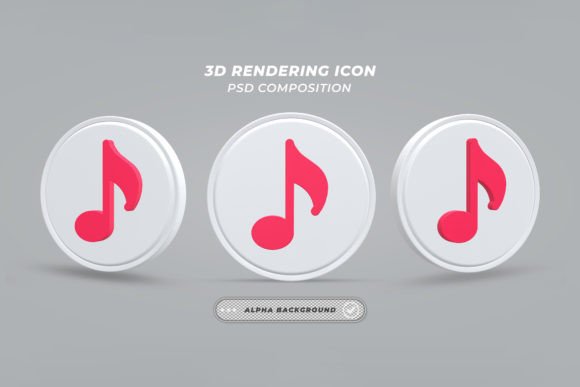
Music Icon in 3d Rendering: Elevating Your Visual Brand with High-Quality Assets
In the fast-paced world of digital design, first impressions are often formed within milliseconds. Whether you are crafting a thumbnail for a new podcast, designing album art for an emerging artist, or building a sleek interface for a music streaming app, the visual elements you choose speak volumes before a single note is played. This is where a Music Icon in 3d Rendering becomes an indispensable tool for modern creators. Unlike flat, two-dimensional graphics, three-dimensional icons offer depth, texture, and a tactile quality that draws the viewer in, creating a sense of premium quality and professionalism.
The shift toward 3D aesthetics in graphic design isn't just a passing trend; it represents a desire for more immersive and engaging user experiences. A well-rendered music icon can serve as the centerpiece of your brand identity, bridging the gap between auditory content and visual appeal. However, creating high-quality 3D renders from scratch requires specialized software, significant technical skill, and hours of rendering time. This is why pre-made, high-resolution templates have become a vital resource for designers who need efficiency without compromising on quality.
Real-World Applications Across Industries
The versatility of a Music Icon in 3d Rendering extends far beyond simple decoration. It serves functional and branding purposes across a wide spectrum of industries. Understanding where and how to apply these assets can significantly enhance the effectiveness of your visual communication.
- Digital Marketing and Social Media: In crowded feeds on platforms like Instagram, TikTok, and YouTube, static images often get lost. A 3D music icon with realistic lighting and shadows stands out, increasing click-through rates for music-related campaigns, playlist promotions, or event announcements.
- App and Web Interface Design: User experience (UX) designers frequently look for icons that feel tangible. Using a 3D rendered play button, headphone set, or musical note can add a layer of sophistication to mobile applications, making the interface feel more interactive and polished.
- Album Art and Merchandise: Independent musicians and record labels often operate on tight budgets. Instead of commissioning expensive 3D modeling projects, they can utilize high-quality renderings as base elements for album covers, t-shirt designs, or vinyl sleeve artwork, giving their physical products a modern edge.
- Presentation Decks and Pitch Materials: Music tech startups and audio engineers presenting to investors or clients can use these icons to break up text-heavy slides. The professional resolution ensures that even when projected on large screens, the imagery remains crisp and impactful.
Why Resolution and Organization Matter
When selecting digital assets, many users overlook the technical specifications until it is too late. A common frustration arises when a downloaded image looks great on a screen but becomes pixelated when printed or scaled up. This is why the technical foundation of your chosen template is critical. A High-Quality 3D Rendering Object should ideally offer a resolution of at least 4500 x 3000 pixels with a 300 DPI (dots per inch) rating. This specification ensures that the asset is print-ready, allowing you to use it on large-format posters, billboards, or high-end merchandise without any loss in clarity.
Beyond resolution, the structure of the file itself dictates how easily you can integrate the asset into your workflow. Templates that feature Smart Object Replacement Layers are game-changers for productivity. Instead of navigating complex 3D software to change colors or textures, you can simply double-click the smart object layer in Photoshop, make your edits, and save. The changes automatically update across the entire composition. This level of organization saves hours of manual adjustment and reduces the risk of errors during the design process.
Customization and Ease of Use
The primary advantage of using pre-rendered templates is the balance between professional output and user-friendly editing. For many designers, especially those who specialize in 2D graphics, diving into 3D modeling software like Blender or Cinema 4D presents a steep learning curve. A well-constructed PSD file bridges this gap. With 100 very easy to edit features, users can tweak every aspect of the icon to match their brand guidelines.
Color customization is particularly important for maintaining brand consistency. Whether your brand palette involves neon cyberspace hues or muted earth tones, the ability to change all colors easily ensures that the 3D icon feels like a native part of your design ecosystem. Furthermore, because the files are organized logically, even novice users can navigate the layers without feeling overwhelmed. This accessibility empowers a broader range of creators—from social media managers to small business owners—to produce high-end visuals independently.
Considerations Before Choosing Your Asset
While the benefits are clear, there are practical considerations to keep in mind when integrating a Music Icon in 3d Rendering into your project. First, consider the lighting environment of your final composition. A 3D object interacts with light differently than a flat graphic. If you place a brightly lit 3D icon against a dark, moody background without adjusting the shadows or highlights, it may look out of place. Most high-quality templates include separate shadow layers or allow for blending mode adjustments to help the icon sit naturally within your scene.
Secondly, be mindful of file size. High-resolution PSDs with multiple smart objects and layers can be large. Ensure your hardware can handle these files smoothly, or consider working with linked smart objects if you are managing a particularly large project. Additionally, remember that while the template provides the 3D object, any surrounding context—such as backgrounds, typography, or additional graphical elements—must be sourced or created by you. The images used in previews are often examples for presentation purposes only, so always plan for the rest of your design layout.
Maximizing Value Through Versatility
The true value of a premium 3D rendering template lies in its reusability. Once you have purchased and downloaded a high-quality pack, it becomes a permanent part of your design toolkit. You can return to the same file months later for a different campaign, simply swapping out the colors or textures to fit the new theme. This long-term utility makes it a cost-effective solution compared to hiring a 3D artist for every individual project.
Moreover, exploring different styles within 3D rendering can inspire new creative directions. You might start with a glossy, metallic finish for a tech-focused music app, then switch to a matte, clay-like texture for a children’s music educational platform. The flexibility of these templates encourages experimentation, allowing you to test various aesthetic approaches without the time penalty of starting from scratch.
Ultimately, incorporating a Music Icon in 3d Rendering into your work is about elevating the perceived value of your content. It signals attention to detail and a commitment to quality. By choosing assets that are high-resolution, well-organized, and easy to customize, you empower yourself to create stunning visuals efficiently. Thanks for Download And also see my other works. maybe you like it too.